
Farmers Market Grocery Store Haul: How I Save Big on $52
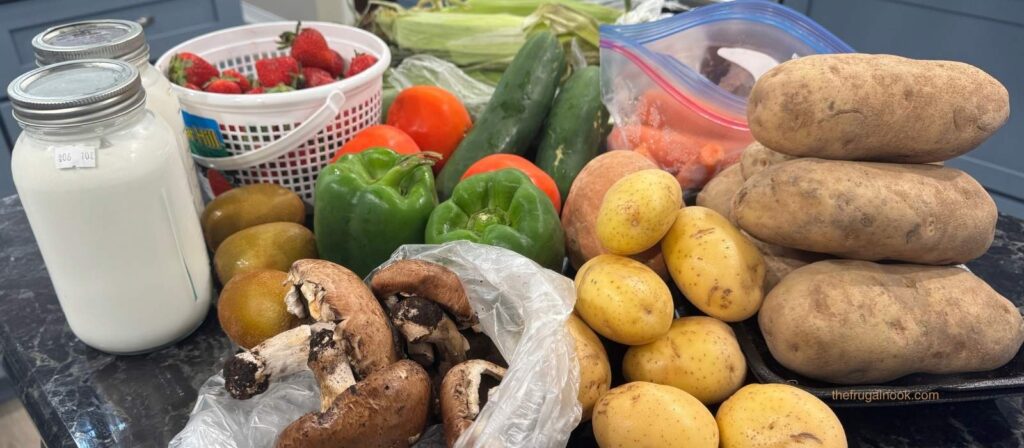
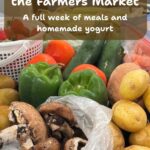
I came home from the farmers market this morning with a basket full of fresh produce, two quarts of goat milk, portobello mushrooms, and enough potatoes to last two weeks. Total spent: $52.
But here’s the thing, the $52 isn’t the whole story. This farmers market grocery haul works because I combined it with what I already had in my freezer and pantry. That’s where the real grocery savings happen.
This is exactly what living frugally means. You use what you already have, then add to it with what you find at the farmers market. It’s not about forcing a rigid meal plan. It’s about building meals around what’s fresh and in season. Today I’m going to show you exactly what that looks like in real life.
DISCLAIMER: This page contains affiliate links. Purchases made through such links may earn me a small commission at no extra cost to you. I always have my readers’ interest at heart. Also, as an Amazon Associate, I earn from qualifying purchases. See full disclosure here.
Table of Contents
The Grocery Haul: What I Bought and What I Paid
Here’s exactly what came home with me this morning:
- Corn on the cob: 6 ears for $3.00
- Russet potatoes: 2 packages for $3.00
- Carrots: 1 package for $1.50
- Sweet potato + small yellow potatoes: $1.50 (came together)
- Cucumbers: 3 for $1.50
- Tomatoes: 2 lbs for $6.00
- Kiwi: 6 for $3.54 (59 cents each)
- Portobello mushrooms: 1/2 lb for $4.99
- Goat milk: 2 quarts for $8.00
- Strawberries: 5 pints (bucket stacked high) for $19.00
Total: ~$52
For comparison, those 5 pints of strawberries cost $3.80 per pint at the farmers market. At Publix fresh strawberries run $4 to $6 per pint. The goat milk alone would cost $8 to $10 per quart at a specialty store. The portobello mushrooms, fresh tomatoes, and seasonal corn push the difference even higher. The same haul at a regular grocery store would easily cost $80 or more, and with less freshness.
If you’re wondering what to buy at the farmers market, start with whatever is piled high and priced by the bucket. That’s usually what’s in season and at its cheapest.
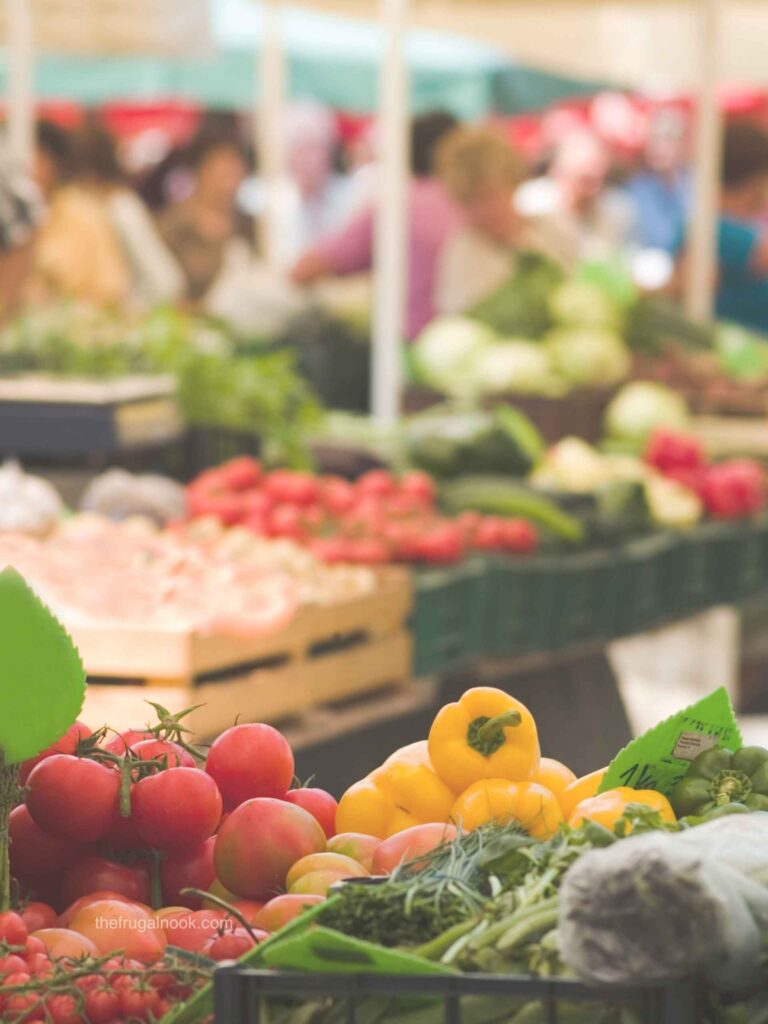
How I Shop the Farmers Market on a Budget
Farmers markets can feel pricey if you wander in without a plan, so I follow a few simple rules.
- Check my kitchen first and shop with a list. I know what’s in my freezer and pantry before I go, so I only buy what fills the gaps. If I spot something in season at a great price, I’ll adjust the list and rework the meals on the spot.
- Buy what’s piled high. When a vendor has buckets of something, it’s in season and priced to move. That’s how I ended up with 5 pints of strawberries for $19.
- Shop the bundles. The sweet potato and yellow potatoes came together for $1.50. Mixed or bagged lots are often cheaper than buying items one at a time.
- Skip what I can get cheaper elsewhere. If a farmers market price isn’t better than the grocery store, I leave it.
What I Already Had on Hand
The farmers market haul doesn’t work alone. It works because of what’s already in my kitchen. This week I’m working with:
- Eggs
- Meat and peppers (from previous shopping)
- Seasonings and spices
- Homemade vegetable broth from my frozen scrap bag
- Pantry staples: olive oil, butter, salt, garlic
This is a habit I talk about in my post on building a frugal mindset: checking your pantry and freezer BEFORE you shop. It keeps you from overspending and means very little goes to waste. The farmers market fills the gaps, and your existing stock does the rest.
Everything I Made (or Plan to Make) This Week
Homemade Goat Milk Yogurt
Both quarts of goat milk are going into homemade yogurt. Making it at home with fresh goat milk from the farmers market is one of the best simple living swaps I’ve made. I share how I make it below.
Fresh Fruit Salad
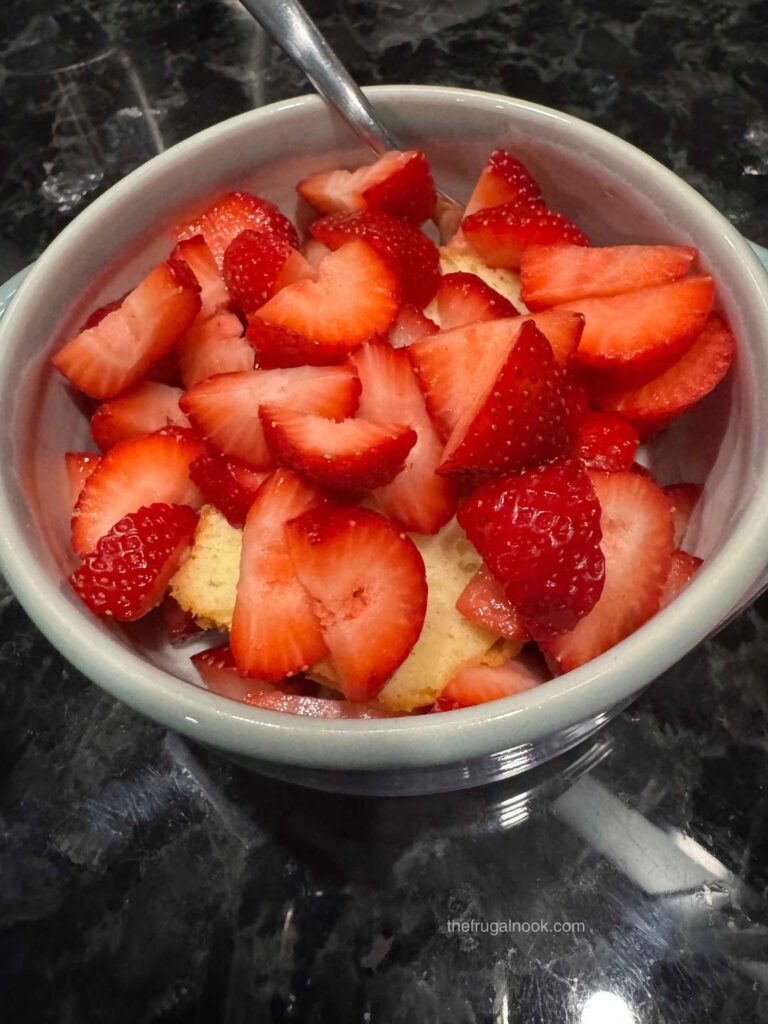
The strawberries, kiwi, and whatever other fruit I had on hand went straight into a fresh fruit salad. It’s simple, needs no recipe, and it gets eaten within a day or two.
Sweet Potato Dog Treats
This one is for Aspen and Koda, my two German Shepherds. The sweet potatoes are getting dehydrated into homemade dog treats. They have clean ingredients, no preservatives, and the dogs go absolutely wild for them.
How I Make Goat Milk Yogurt at Home
Goat milk isn’t always available at the farmers market, but when it is, I buy it. Several people in my house can’t have cow’s milk, so when I find it, I make things they can enjoy with it. Yogurt is at the top of that list.
The process is simple. I heat the milk, then let it cool down to 110 degrees. Once it’s there, I pull out about 1/2 cup of the warm milk and stir in the live culture. For the culture, I use 2 tablespoons of plain yogurt left from my last batch, or a container of plain yogurt from the store. Then I stir it back into the rest of the milk.
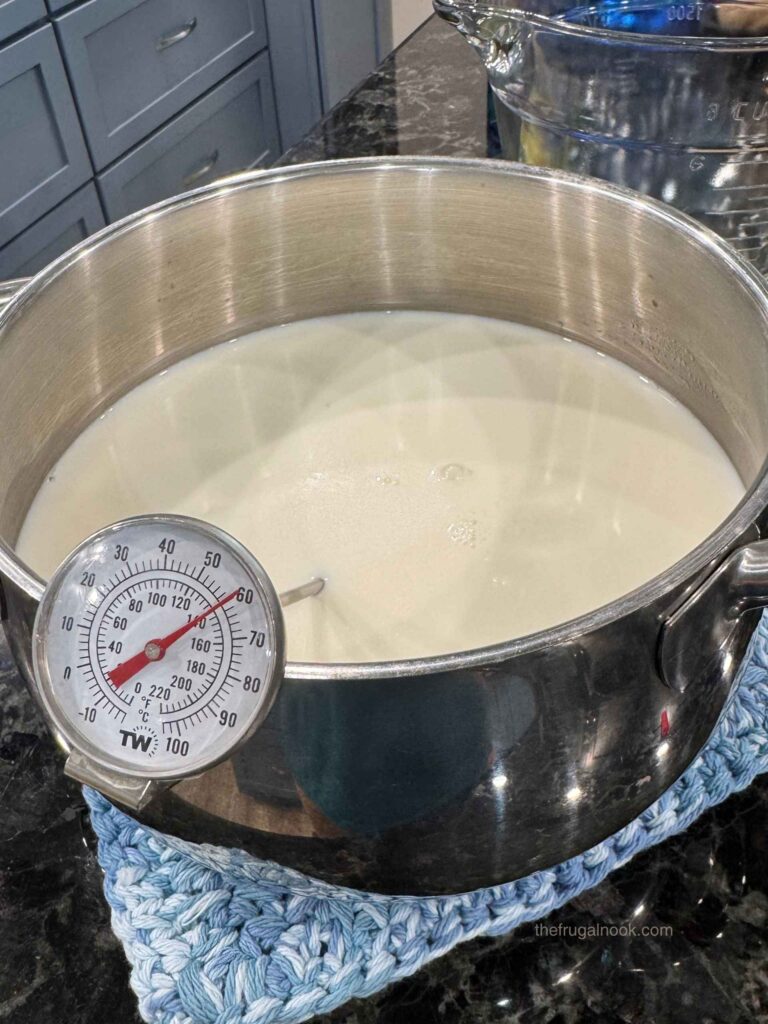
From there, I have three ways of keeping it warm while it sets:
- Yogurt maker: This is my regular method, and the easiest. (set to 9 hours)
- Instant Pot: A good option if you already own one (usually comes with a yogurt setting).
- Crock pot: I cover it and wrap it in towels to keep it warm overnight (12 hours). It takes longer, but it works with equipment you probably already have.
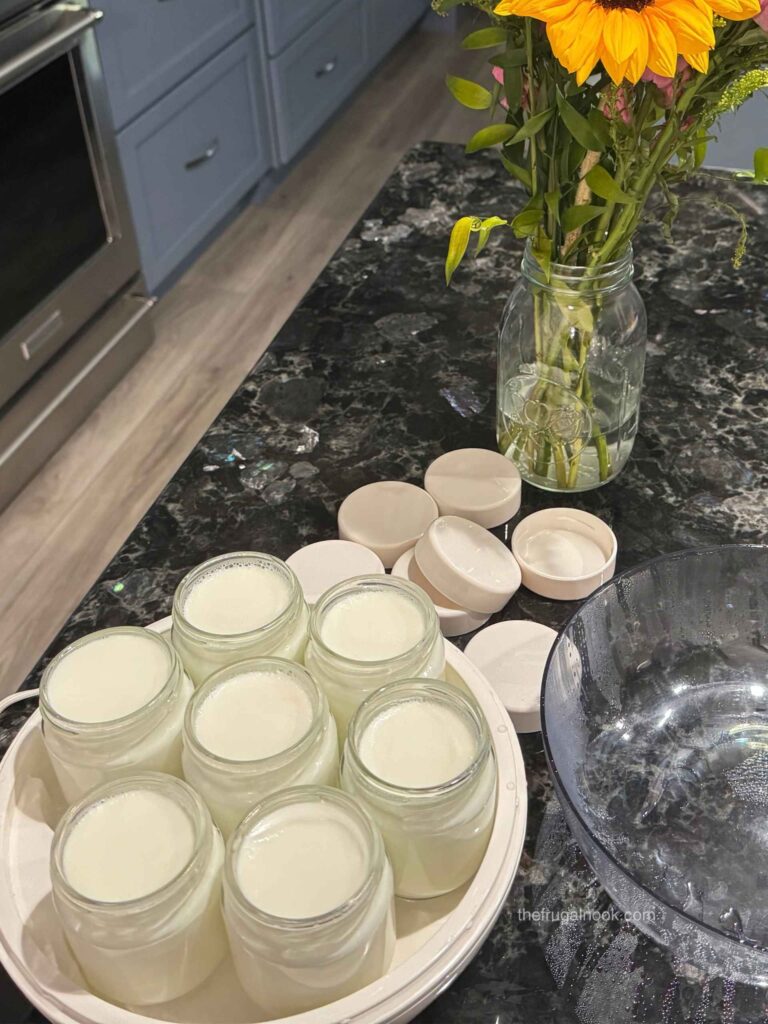
Goat milk yogurt comes out thinner and a little tangier than yogurt made with cow’s milk, so don’t expect it to be thick. It’s best for breakfast with fresh fruit, as a light dessert with fruit, or just plain. I add whatever I have in the house, plus granola for some crunch.
Saving a bit from each batch to start the next one also means you only buy yogurt once, which fits right in with how I like to stretch groceries.
Keeping It All Fresh
I handle a farmers market haul as soon as I get home. Everything gets rinsed and prepped for what I need, so nothing sits in a bag forgetting to be used.
- Strawberries: These get washed, prepped, and stored in regular glass storage containers. I bought mine on Amazon, and they’ve held up well. I save the tops in a labeled freezer bag, and they keep just fine for about two weeks until I’m ready to use them.
- Tomatoes: I rinse them and keep them in the refrigerator until I need them.
- Portobello mushrooms: Same as the tomatoes. I rinse them and refrigerate them until I’m ready to cook.
- Corn: The husks are the best packaging, so I leave the ears in them. They stay fresh that way for a few days.
- Sweet potatoes: They keep well as they are. I cut them up when I’m ready to dehydrate them for the dog treats.
Doing this right away is a big part of why the $52 stretches so far. Food that’s prepped and ready to use actually gets eaten, and food that’s forgotten in the bottom of a bag doesn’t.
📌Save a Pin 📌
Dinners This Week
With what I bought and what I already had, here are the farmers market ideas shaping my week:
- Potato side dishes: 3 to 4 dinners worth between the russets and yellow potatoes
- Breakfast potatoes: at least one weekend morning
- Corn on the cob: sides for 2 to 3 dinners serving 3 to 4 people
- Fresh salad with tomatoes, cucumbers, and peppers
- Cooked vegetable sides: sautéed mushrooms, roasted peppers
- Soup: any leftover vegetables plus my frozen broth go straight into a pot
The Real Numbers
From one $52 farmers market trip combined with pantry and freezer staples:
- 10 to 12 meal components across the week
- Breakfast covered at least once
- Snacks and fruit for several days
- Dog treats for the pups
- Homemade yogurt for the week
- Soup from scraps, which is essentially free
That’s what smart shopping looks like. Not extreme couponing. Not a complicated system. Just knowing what you already have, shopping for what’s fresh and in season, and building meals around real food.
What That $52 Works Out To
I counted 10 to 12 meal components from this haul, which comes to roughly $4.33 to $5.20 per component. That doesn’t count the pantry and freezer staples, but it does include the yogurt, fruit salad, and dog treats along with the dinner sides. It’s a loose number, not a precise one, but it shows why the trip felt worth it.
Don’t Throw Away the Strawberry Tops
One small tip before I go: I saved the strawberry tops and popped them in the freezer. You can use them to make strawberry infused water, add them to smoothies, or simmer them into a simple strawberry syrup for drinks and desserts. Nothing wasted.
Plan Before You Shop
The secret to making a farmers market trip stretch this far is knowing what you already have before you go. That’s exactly why I built the Cozy Meal Planner. It tracks your pantry, freezer, and shopping list all in one place, so nothing gets forgotten and nothing gets wasted.
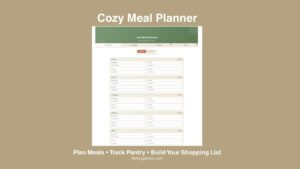
Want to track your pantry, freezer, and shopping list in one place? Get the Cozy Meal Planner in my shop.
Final Thoughts
Farmers markets get a reputation for being expensive and sometimes they are. But when you shop seasonally, buy what’s being sold in volume, and build your meals around what you find, they can be one of the best grocery savings tools you have.
$52 at the farmers market. $80+ worth of groceries at Publix. A full week of meals, homemade yogurt, dog treats, and fresh fruit. Real food. That’s cozy living in action.
Want more simple money and kitchen habits? Read How to Lower Your Grocery Bill Without Extreme Couponing on my sister site, My Tasteful Threads.
Frequently Asked Questions
Is the farmers market cheaper than the grocery store?
Not always, but it can be. My strawberries came to $3.80 per pint, while Publix runs $4 to $6. The goat milk was $4 per quart, compared to $8 to $10 at a specialty store. The savings are biggest on seasonal produce sold in volume, so I compare prices on the items I buy most before assuming the market is the better deal.
What should I buy at the farmers market to save money?
I look for what’s in season and piled high. This trip that meant strawberries by the bucket, corn, potatoes, and tomatoes. I also watch for bundled lots, like the sweet potato and yellow potatoes that came together for $1.50. Items that are hard to find or pricey elsewhere, like fresh goat milk, can be worth it too.
How do I keep from overspending at the farmers market?
I check my pantry and freezer first, then shop with a list so I only buy what fills the gaps. I stay flexible, though. If I see something in season at a great price, I’ll adjust the list and rework the recipes and meals on the spot if I can manage it. The list keeps me on track without making me pass up a good deal.
Is it worth buying goat milk at the farmers market?
For me it is. Goat milk isn’t always available, but when it is, I buy it. Several people in my house can’t have cow’s milk, so I need to find it and make things they can enjoy with it. Homemade yogurt is the big one, and it saves money too, since store-bought goat milk yogurt is expensive and hard to find.
How do I make a farmers market haul last all week?
I build meals around what I bought and what I already have. Potatoes and corn became several dinner sides, tomatoes and cucumbers went into salads, and leftover vegetables plus frozen homemade broth turn into soup. Planning a few meal components ahead of time, rather than a rigid menu, keeps the food from going to waste.
What can I do with produce scraps and leftovers?
Almost nothing has to be thrown away. I keep a frozen bag of vegetable scraps for homemade broth, and I freeze strawberry tops for infused water, smoothies, or simple syrup. Leftover vegetables go into soup, and sweet potatoes can be dehydrated into dog treats.
📌Save This Pin 📌
Stay Connected
Want more budget-friendly recipes and frugal living tips? Subscribe to The Frugal Nook newsletter or follow along on Pinterest.

About Me
I’m Mary Ann, the face behind The Frugal Nook (and its sister site, My Tasteful Threads). Before blogging, I spent years in IT project management which probably explains why everything I do here, from meal planning to home organizing, tends to come with a checklist!
These days, my focus has shifted to what actually matters to me: making a home run smoothly without overspending, cooking meals that stretch further, and finding simple, doable ways to live well on less. I’m also a grandmother, which means a lot of what I share here gets tested (and approved) by the people I love most.
The Frugal Nook isn’t about deprivation or living without, it’s about being intentional with what you have and finding joy in the process. I’m so glad you’re here, and I hope you’ll stick around.
Many people think farmers markets are a luxury but you are so right! They can fit in the frugal lifestyle they are cheaper than big box stores lately!
You are absolutely right. The food is fresher and the sellers/farmers can tell you how they grow the items. The prices are reasonable and you can choose which you want rather than dealing with pre-packaged items.
Goat milk yogurt looks good! I get local sheep milk. I bet I could try to use that for the recipe?
goat milk yogurt is great. I’ve made and will be posting my recipe shortly.